By Patricia Putri | Berlin, Germany - 22nd November 2025
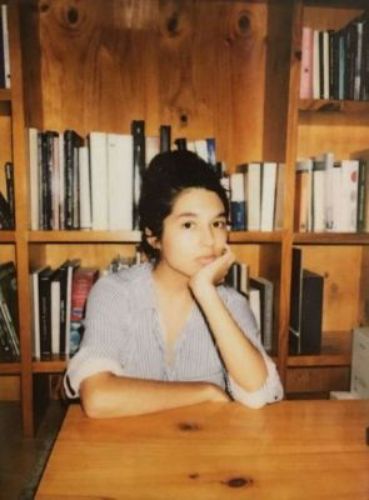
“The experience of being queer is already challenging, and adding the experience of migration makes it even more difficult. Yet, this in-between space is where particular forms of care, resistance, and community can emerge.”
–Camila Flores-Fernández
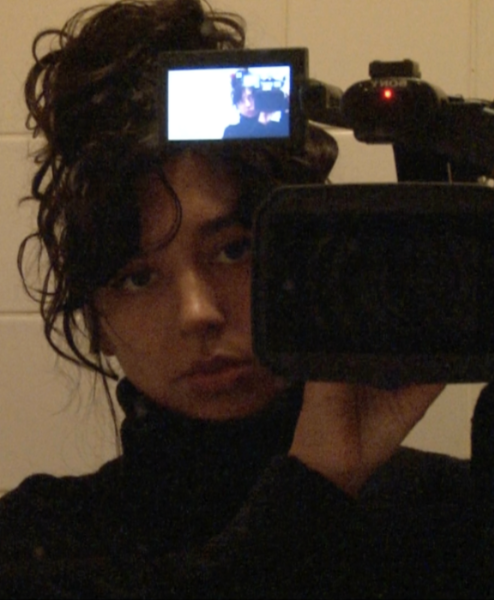
If there is anyone for whom the feminist adage “the personal is political” feels almost literal, it is Camila Flores-Fernández. Raised in Lima by two social architects, Camila grew up observing and documenting the ways people shape, inhabit, and negotiate space. This early exposure continues to inform her practice as a filmmaker and multimedia artist, evident in works such as The House of Rosa (2019), Four Green Chairs in Skanderbeg Square (2023), Obreras (2023), Far From Gaza (2024), and Ghost in the Park (2025), all of which explore gender, migration, and the intimate politics of place. Camila finds urgency in working through collaboration and ethnographic practices as she believes that it foregrounds marginalized voices and collective histories.On a cold afternoon, with tea in hand and screens between us, Camila and I spoke over Zoom about her documentary We Are Here (2023). We discussed leaning into uncertainty, creating safe spaces for participants, sharing authorship through collaborative filming, and embracing the messiness of editing. She shares why for her, this chaotic process is precisely what makes the work worthwhile.
Patricia: Camila, thanks for making the time for us today! I’d just like to say that the angle that you have chosen for your movie “We Are Here” is quite unique. I don't think we think about queer migration a lot, especially in the context of Europe because being queer is largely accepted. I wonder if you can share a little bit about the inspiration behind this movie and some personal aspects in your life that you have developed upon and turned it into a very clear idea for a documentary film?
Camila: The inspiration comes from my background as an anthropologist, and before I also studied literature in Peru, and I also worked in social development in Peru for quite a long time. So I already have the professional and academic perspective of urban marginality. And also the concept of intersectionality– all these things mixed inspired me when I started making films.
I felt that in the case of queer migrants specifically, is that they do not quite fit in any category. When you think of queer people living here in Europe, many are relatively accepted, but migrants are often kept at the margins. At the same time, many migrant diasporas coming from outside Europe tend not to accept queer identities either. So it becomes a situation where there is almost no space that truly feels like yours. The experience of being queer is already challenging, and adding the experience of migration makes it even more difficult. Yet, this in-between space is where particular forms of care, resistance, and community can emerge.
So that’s why, in my first fully funded project, I feel inclined to focus on stories like this, stories that can make more of a difference when told.
I wanted to combine my own interest in the topic with the reality of living in Belgium, particularly in Brussels since it is known as a migration hub. Being a migrant and a queer person myself, living there in the ground is not as it seems. I wanna show these bureaucratic processes because if you haven't lived it, you won’t know how nerve wracking it is to be waiting for a reply, to not know what to do, or even to live your true self when you don’t know where you are.
P: What you said about your experience in Brussels reminds me of what Davit says in the movie. He explained that his move was mainly driven by his desire to live as a queer person with fewer fears, noting in one scene that if something were to happen to him in Belgium, he feels like at least there is a government that can protect him, unlike in Georgia. At the same time, he shared that his first months in Brussels were horrible, and that he experienced more homophobia here than in his entire life in Georgia. I was wondering whether you already knew this about Davit before filming, or if it emerged organically during the process?
C: Interesting question. So I put the open call through an NGO called Queers on the Move, a grassroots organization under the Rainbow House umbrella. They have a center in Brussels that operates as part of Rainbow House and they help queer migrants and refugees adapt and their bureaucratic processes. Anyways, some people reached out, which became the opening to my ‘fieldwork’. I quickly figured out that the two people I connected or vibed with the most are Davit and Levis. I asked them about, very briefly– about their experiences and I thought they were very poignant and interesting perspectives. But I wanted to save that, and wait until we started filming because I feel like if I asked them too much their answers (when filming) will come off more fabricated. I had everything that I needed to know and I just waited until we started recording to ask them more questions and see what would come up.
This also made it more interesting in the editing process because I could find the exact things I wanted to include, but it was a bit more chaotic because I didn't know exactly what to expect. I knew that they were queer people, but throughout the process I got to discover about them being the first ever drag queen in an underground LGBTQ scene in Georgia and that is something that I didn't know when I first met them. I just knew that they were cool and very open.
I only needed openness and commitment from the very beginning, and the rest followed.
P: That’s so interesting because I do think your approach really worked! Now as for the experimental aspect of your documentary. I notice that they (the film subjects) also film things themselves, right? Was that a conscious decision that you made based on your anthropological approach?
C: Okay, so my base concept or my only idea that I came with was to analyze the relationship between the queer migrants and the city. That was my main axis, and from there I wanted to see what would come out. Even though we had good equipment and a good crew, we didn’t have a lot of time or space. So I thought the best way to express this idea was to catch them in their most intimate environment, which is their homes. The place where they feel comfortable, gender-affirmed, all of that. And then see how that relates to the city, to the roughness outside, to the way they are perceived.
So I felt it would be visually more cohesive if I filmed them doing things they would normally do day to day. I asked them, “What would you usually do?” And Levis said something like, “I’d make some tea.” He was also still working on his house because he’d just moved in with his boyfriend. Davit, on the other hand, was already more established– they had been in Belgium longer. So with them, it made sense to film him getting ready to perform, to do drag.
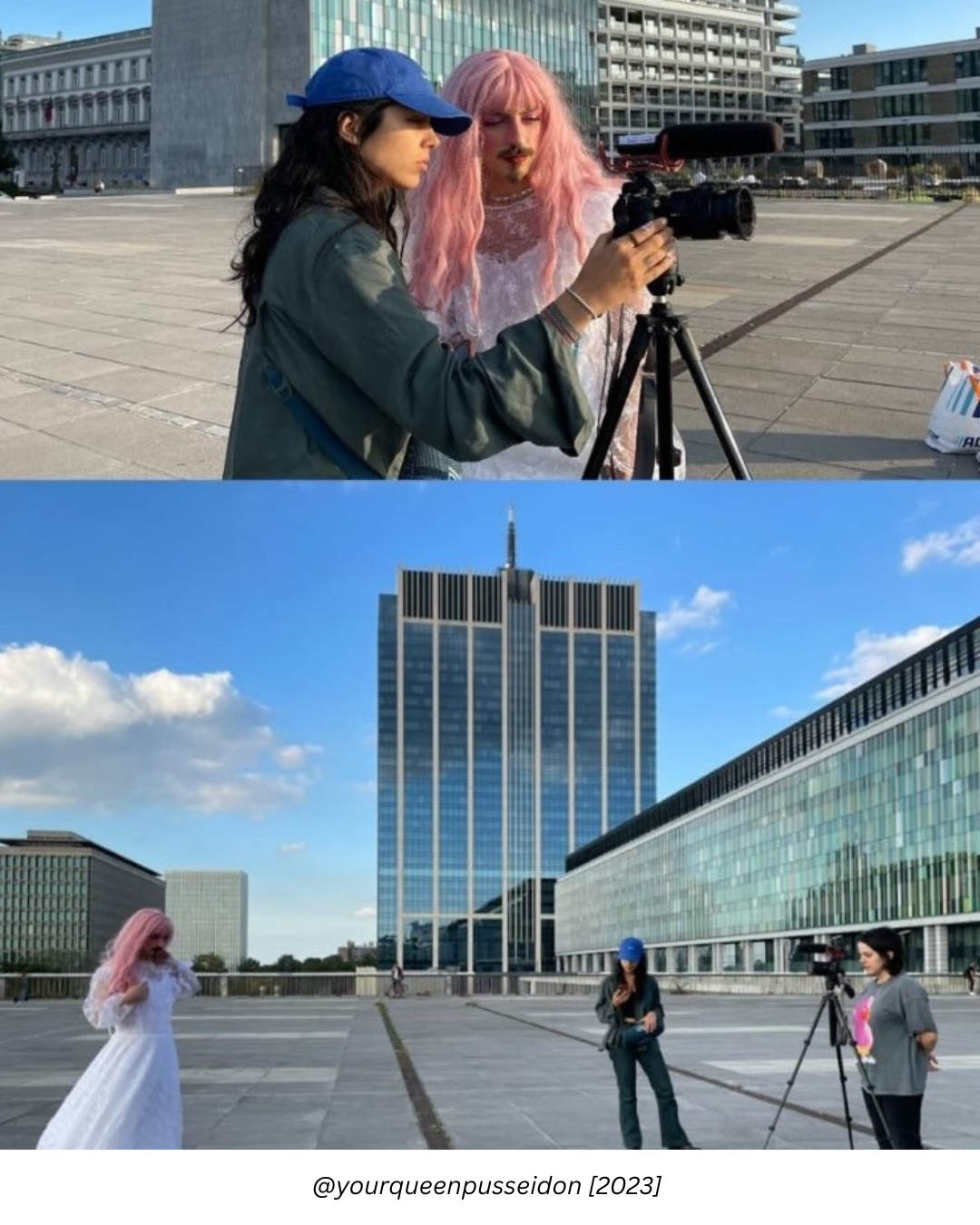
That’s how we came up with the idea of filming them in their personal spaces and then going around Brussels doing what they normally do. For Levis, that meant going to meetings at Rainbow House to figure out his migration process. With Davit, they had already gone through that, so it made sense to show him doing something that brings them joy, which is performing.So really, talking to them about their day-to-day life is what led us to this idea of filming them moving from their personal space into the public space, and observing that transition.
P: And how did you arrange that? Did you give them a camera?
C: Yes. So first we had a shooting day with each of them on different days– where we filmed them at home, did the first interviews, and gathered more information about their daily routines. After that, I felt like I needed more information and more footage so I had this idea, randomly, while talking to my sister: since I wanted the narrative to really come from them, what if I gave them my camera? If I wasn’t there as a filmmaker, maybe they would just go around and film whatever they wanted.
So I tried this sort of collaborative process. I gave them my camera on a Monday and said, “I’ll pick it up on Friday. Do your own thing, film whatever you feel comfortable with.” Then I’d get the camera back, review the footage, and plan the next shooting day. It became like a ping-pong of footage.
Every time I got the camera back I was excited, like, oh my God, what will be on it? Levis surprised me the most.
He made all these vlogs and there’s one that made it into the film where he’s wearing a face mask and telling his whole life story. I was like, “Whoa… what? I have to put this in!”With Davit, I also got so much material: them at parties, walking through Brussels, everyday things. And I don’t know if it’s that noticeable in the film, but what’s funny is that, without planning it, they filmed in the same spaces we shot earlier. In the beginning of the film, we have shots of empty spaces in Brussels like the Atomium and a little fountain. Then in the footage they filmed themselves, they were in those exact spots too.One day we even shot those empty spaces without them, just me and the crew going through Brussels and repeating the same scenes. Later, their own footage brings those places to life.So yeah, this approach really took full form when I was editing.
P: You must have gotten so many footages then, and had to really look at all of them, pick and sort of organically decide, which footages are going to create a story, right? Because in a documentary movie, you also still need to have a certain storyline. So how did you do it? Did you do it to get it with your producer? Did you ask for a lot of advice? What was your compass?
C: Yeah I mean, I did it by myself. And again, this probably shows how I was still learning to work in a team. During shooting, I got a lot of feedback from my producer, the camera operators, and the cinematographer. They all had more formal film training than me. They would say, “This place looks good,” or “This angle works,” and I let them bring their creative input.
But the editing was just me. That was my moment to solve the puzzle. It became like doing Tetris. Maybe that’s why the final product was a surprise for everyone except me (laughs). For example, the final scene, which I think all tied the feelings together– I had no idea how to use the final footage until I put all the pieces together. It was a very individual process, but I quite enjoyed it because I love editing. Once shooting is done and I don’t have that stress anymore, I can just sit with what I have, move things around, and make it work. It was really fun.
P: Moving on to another question that is more about the content of the movie. Both Levis and Davit share their migration journeys in the film. At the end, Levis says he is still waiting for his asylum decision, which could take eight months to a year. He does not know what will happen, yet he finds happiness in the present and, for the first time, feels safe and calm because he is surrounded by community.
In contrast, Davit tells his friend during the picnic scene that they always have to compromise, but that “at least the process was quick and we didn’t have to live on the streets or be hungry,” suggesting that Belgium took care of them as queer people in ways that might not have been possible in Georgia. I couldn’t help noticing this contrast. Davit describes the procedure as relatively quick, even though it involved an eight-hour interview revisiting traumatic experiences, while Levis is still waiting and may do so for a long time. Was highlighting this difference intentional?
C: You got it right. It wasn’t intentional in the sense that I didn’t plan it from the beginning, but I definitely wanted to highlight it. Yeah, the differences in the migration process depending on your racial and economic status, among other things. I already knew they were going to have different journeys because they come from very different places. I wanted nuance. So I tried to show perspectives from both of them where it was easy and joyful and they found happiness here, but also where it was hard. And even though Europe markets itself as this place where everything is perfect, there are many difficult parts of the process. So yeah, it wasn’t planned exactly like that, but I did want to bring nuance and show both perspectives.
P: My next question is: you mentioned you worked in social development in Peru, so was the interest in topics such as queer migration already there before you started going into films? Or did watching films bring awareness to topics such as these?
C: I think a lot of stories can be told in different ways, but I’ve always been drawn to film because it feels more democratic. You can make something beautiful with expensive equipment, but you can also just use your phone. With anthropology or NGO work, it often reaches a small, already-educated audience. But films reach people more easily. You don’t need prior knowledge– you can simply watch and feel. That’s why I see film as a kind of Trojan horse: something enjoyable that emotionally engages people and opens them to experiences they might not otherwise encounter.
P: You’ve developed a habit of finding grants and funds, and I think that would be really useful for our readers if you share about your journey on finding them?
C: So… I’m basically chronically online, always on the internet trying to find alternatives. Because again, I’m here in Europe, I speak Spanish and English, but I’m not used to Europe and I didn’t know how things worked. I just knew I wanted to do things related to oppressed or marginalized people, which happens everywhere. So I look online all the time. I have many websites bookmarked and I’m always looking for opportunities, specifically for filmmaking.
P: So you were looking specifically for filmmaking programs and grants?
C: Yeah, or anything related to arts in general. Because I have no formal background in filmmaking; I just like it. So whether it’s photography, visual arts, whatever– there’s a space for everything. So I’d look for opportunities that aligned with what I enjoy, and then also find a balance between what I know how to do, what I like doing, and where the money is actually being allocated.
That might sound a bit mercenary– creating things based on what grants exist– but honestly, it’s also a form of resistance. Arts are underfunded already, and I’m not European, so there are a lot of things I can’t apply for simply because of that. But there are still way more opportunities here than in Peru or other places in the Global South.
So what I do is look for opportunities available in Europe, knowing that a lot of programs here invest in bringing in different populations, giving them resources, and funding them to create things. Then I try to shape ideas around those opportunities.
For example, I was already interested in cities, urban marginality, and different populations. And then I saw an open call for a placemaking grant.
One of the cities listed was Brussels, and I thought, “Perfect.” So immediately I was like, okay, I have this opportunity, I have some ideas– how can I make the ideas I already have sound good for this specific grant?
It’s like a mapping process, which social sciences actually trains you for. I had the conditions, the prompt, and then the reality around me. So I thought: I’m in Brussels, there’s migration, there’s openness but also racism, there’s community– so what stories interest me here?
I did some digging, and I realized there’s a big queer migrant community in Brussels. I thought, “Okay, this is it.” Then I found an axis through which to connect all these topics: queer migration and queer migrants navigating the city and the migration process. And from there, I developed the whole idea.
As for funding in general: I’d tell readers they need to be open to morphing their ideas into something that’s also sellable– and to selling themselves, too. When I applied, I had to explain why I was the person who should make this project. People are giving you money and trusting you with it, so you have to convince them that it’s better because you are doing it.
P: Do you always apply for grants in the place you’re currently living? For example, now you’re based in Berlin. Would you also apply for grants from other countries?
C: Yes. I just go everywhere. There’s a saying in Spanish, I don’t know if it translates– “I have no flag.” Like, which means I don’t respond to anyone. I’ll take whatever I can get. (laughs)
So I apply to everything. Unless it’s illegal for me to apply, I’ll apply.
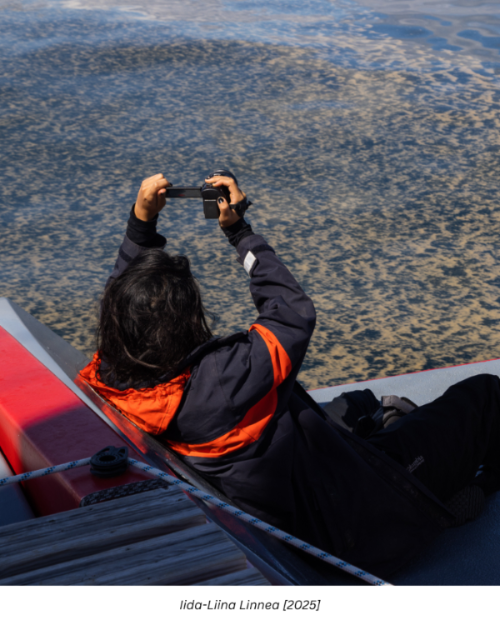
For example, I was never artistically invested in climate change. It wasn’t what interested me at the time, even though it’s important. But I saw an opportunity to go to the Baltic Sea, and the open call was about climate-related topics– erosion, human impact. And I thought, okay, I can get a cool experience, develop my practice, get funding, and make something relevant. So I applied, and it worked out.
Same with the last thing I did here in Berlin. I applied when I wasn’t living here yet. I lived here last summer, but at the time I didn’t even know if I’d be here. They still gave me the grant. And again, I saw the topic, saw the open call, and thought, “This fits.” So I applied, got it, and then moved back to Berlin.I apply to everything as long as it relates to something with a social output. And there’s always a way to make it work, especially when there’s money behind it.
P: But you didn’t always do that from the beginning. Your first film in Peru about women social activists– you did all of that yourself, right? Then you found that festival for films shot on iPhones, and it got in. So in a way, you created this for yourself from the beginning. You knew what platforms could uplift your work, and you built your portfolio from there until you eventually got funding.
I think that’s amazing, and I want to share that with our readers if you don't mind.
C: Yeah, of course. I think it’s useful. A lot of people have their own practice and expect to find opportunities and that can happen. But there’s also another route, which I find more interesting: find the opportunities first, and then push your narrative and interests into them. It’s very doable if you’re flexible.For the first film, I used whatever I had. I didn’t know there was a festival for iPhone-shot films. I just thought, “There’s an opportunity. I can do this with my iPhone.” So I made it and hoped it worked out. And because it was the first thing I did, I had to be speculative. I just do it, see what comes, and build from there.
Ut enim ad minim veniam, quis nostrud exercitation ullamco laboris nisi ut aliquip ex ea commodo consequat. Duis aute irure dolor in reprehenderit in voluptate velit esse cillum dolore eu fugiat nulla pariatur